

Why Your Physician Job Postings Aren’t Working—And What to Do About It Most physician roles stay open 4–9 months. It’s rarely the compensation. Here’s what’s actually killing your time-to-fill—and how to fix it without paying another agency.
If you recruit physicians for a living, you already know the math is brutal. The average time-to-fill for a physician role is somewhere between four and nine months. During that stretch, your organization is paying locum coverage, burning out existing staff, and quietly bleeding revenue from missed patient visits. The pressure is relentless.
So you post the job. You put it on the big general boards. You wait. You get a few applications—none of them the right fit. The role drags on. And somewhere around month three, leadership starts asking uncomfortable questions.
Here’s the uncomfortable truth: most physician recruiting failures aren’t about compensation. They’re about visibility in the wrong places.
The Core Problem: Physicians Don’t Browse Generic Job Boards
Think about how a physician actually looks for a new role. They’re not scrolling Indeed between patients. They’re not checking LinkedIn the way a marketing manager might. Physicians move deliberately—they start looking when they’re ready to move, they go to specialty-specific or physician-focused resources, and they respond to postings that speak directly to what they’re weighing.
When your job is buried under nursing assistant listings and admin roles on a general board, qualified MD and DO candidates either never see it—or they see it and assume it’s not worth their time. The framing of the board itself sends a signal about the seriousness of the opportunity.
Being on a general job board as a physician recruiter is like advertising a neurosurgery fellowship in the classifieds section of a local newspaper. The audience is wrong, even if the posting is excellent.
The Agency Trap—And Why It’s Not Always the Answer
When in-house recruiting stalls, the instinct is to bring in a placement agency. And sometimes that’s the right call. But it comes with real costs that often go underestimated at budget time.
Most physician placement agencies charge 15–25% of the candidate’s first-year compensation. For a primary care physician earning $280,000, that’s a $42,000–$70,000 fee—on top of whatever you’ve already spent on job postings, recruiter time, and locum coverage during the vacancy.
Beyond the fee itself, there are softer costs:
- You lose control of candidate communication—the agency is the intermediary, and that relationship starts before you’re in the room
- Candidates sourced by agencies are often passive, meaning they may be open to a move but haven’t fully committed—extending your timeline
- Agency incentives and your incentives aren’t perfectly aligned; they want a placed candidate, you want the right candidate
- If the hire doesn’t work out within the guarantee window, you’re starting over—often with the same agency
None of this means agencies are bad. It means they should be a calculated choice, not the reflexive response to a stalled search.
What “Visibility Where Physicians Are Looking” Actually Means
Physicians who are actively considering a move tend to do a few things. They ask colleagues. They check specialty society resources. And they look at physician-specific job boards—platforms where the signal-to-noise ratio is high and every posting is relevant to them.
This is the distribution problem most in-house recruiters underestimate. Your posting may be excellent. Your compensation may be competitive. Your practice environment may be genuinely attractive. But if the right candidates never see it because you’re posting in the wrong channel, none of that matters.
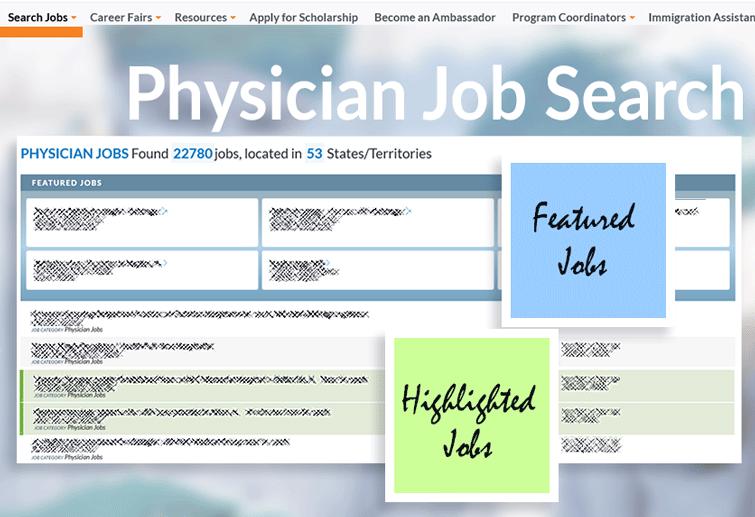
A physician-focused job board solves three things at once:
- Audience quality: Everyone browsing is an MD or DO—you’re not sifting through unqualified applications
- Candidate intent: Physicians who visit a physician-specific job board are actively looking, not passively scrolling
- Posting credibility: The platform itself signals that this is a serious physician-level opportunity, not a general clinical role
How to Write a Physician Job Posting That Actually Converts
Even on the right platform, a weak posting will underperform. Here’s what separates physician postings that generate serious inquiries from those that sit quietly for weeks.
Lead with what makes the opportunity rare
Physicians receive recruiting outreach constantly. Generic descriptions (“competitive compensation, excellent benefits, great culture”) register as noise. The first thing your posting should answer is: why would a physician choose this role over the other three they’re considering? Is it the patient population? The clinical autonomy? The partnership track? The location? Name it specifically.
Be transparent on compensation
Postings that hide compensation ranges get fewer inquiries from serious candidates. Physicians do their own math—they know market rates. A posting that lists a real range (or at least a floor) is perceived as more credible and respectful of their time. Postings that say “competitive compensation” and nothing else create friction.
Speak to the lifestyle, not just the job
Physicians choosing a role are choosing a community, a schedule, a life. If your opportunity is in a desirable area, say so. If the call schedule is genuinely light, say so. If there’s a thriving physician community in the market, mention it. The practice environment details often matter as much as the clinical details.
Make the next step frictionless
A physician who is interested shouldn’t have to navigate four clicks and fill out a form to express interest. Make contact easy. Provide a direct email or a simple application path. Every extra step reduces conversion.
Which Roles Benefit Most From Targeted Physician Job Boards
Almost any physician role benefits from being posted in a physician-specific environment, but some categories see especially strong results:
- Primary care in competitive markets — Family medicine, internal medicine, and pediatrics roles in markets with multiple health systems recruiting simultaneously benefit from every visibility advantage available
- Locum tenens and short-term coverage — Physicians open to temporary assignments are actively browsing; a specialty-focused board concentrates that traffic
- Managed care and non-traditional roles — Utilization management, medical director, and population health roles often get lost on general boards where candidates don’t know to look for them
- Rural and underserved markets — Hard-to-fill geographies need maximum exposure; limiting distribution is the last thing these searches can afford
- Subspecialty roles — Gastroenterology, neurology, psychiatry, and other specialties with thin candidate pools require targeted reach
A Practical Recruiting Strategy That Doesn’t Require an Agency
The most effective physician recruiting strategies in-house teams use tend to share a few common elements. None of them require paying 20% of a salary to a placement firm.
Start with targeted visibility. Post on physician-specific platforms, not general job sites. This is the single highest-leverage change most in-house teams can make. The candidate quality improves dramatically when you’re reaching people who are actively looking in the right place.
Build a pipeline, not just a search. Don’t wait until a role opens to build relationships with potential candidates. LinkedIn, specialty society events, and even your own medical staff can be sources of warm introductions to physicians who might be open to a conversation in 12–18 months.
Measure what’s actually working. Track where your hires are coming from. If you can’t answer “which channel drove my last three physician hires,” you’re spending without intelligence. Physician-focused boards that provide analytics give you this visibility.
Don’t let postings go stale. A 90-day-old posting with no updates signals that the role is either filled or hard to fill—neither is the message you want to send. Refresh the posting, update the language, and keep it active.
The recruiter who fills roles fastest isn’t always the one with the biggest budget. It’s the one who’s in the right channel at the moment a physician decides they’re ready to move.
The Bottom Line
Physician recruiting is hard. The candidate pool is small, the stakes are high, and the pressure to fill is constant. But most of the failure in physician recruiting isn’t about effort—it’s about distribution. The right posting in the wrong channel is still a posting nobody sees.
If you’re ready to stop relying on general boards and expensive placement agencies, putting your role in front of physicians who are actively looking is the most direct path to shortening your time-to-fill.
MDdocjobs exists for exactly this: to connect physician recruiters with MD and DO candidates who are genuinely in the market. Flat-rate pricing, no commission on hire, direct candidate contact. If you have an open physician role right now, posting it takes about 5 minutes.
Or use our AI Generator to place a job: https://mddocjobs.com/generate-a-physician-job/